
You've tried everything. You're exhausted. And your pain is still there.
Every. Single. Day.
But it doesn't have to be this way.
1/3 — The Physical Signal
This is the actual message your nervous system sends. A tissue injury, inflammation, nerve compression,... Your body detects a problem and alerts the brain. This part is real, important, and necessary. It's information.
1/3 — Anticipation: The Fear of Future Pain
Your brain doesn't just process what's happening now. It constantly predicts what's coming next. If you've lived with pain for a long time, your brain has learned to expect it, and that anticipation amplifies the signal. The fear of pain becomes part of the pain itself.
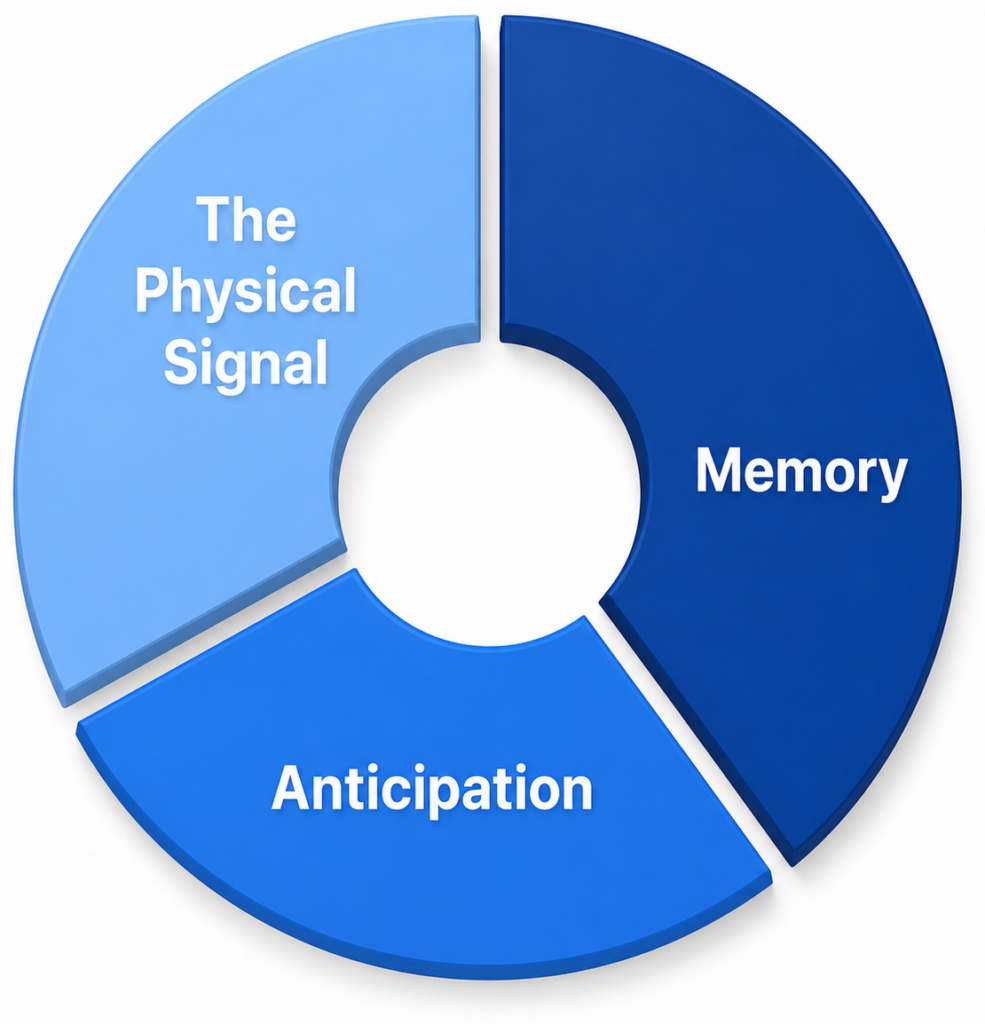
1/3 — Memory: The Echo of Past Pain
Your nervous system records every pain experience. When a new signal arrives, the brain layers those memories onto the current moment, making the pain feel heavier, more familiar, more inescapable than it might otherwise be.

Conclusion
What this means, practically: the raw physical signal may represent only one third of what you actually feel.
The other two thirds, anticipation and memory, live in the brain. And the brain is changeable.
Pain + Emotional Stress = Suffering
Pain is the sensory experience. Suffering is what happens when you layer fear, frustration, grief, helplessness, or tension on top of it.
When you're anxious, your nervous system shifts into a state of high alert. Cortisol rises. Muscles tighten. Your pain-processing circuits become hypersensitive, more reactive to signals that might otherwise be manageable.
The result: stress amplifies pain, and pain amplifies stress. A loop that can feel impossible to escape.
But here's the genuinely hopeful part:
If your nervous system can amplify pain, it can also learn to quiet it.
The brain is neuroplastic: it changes in response to experience.
And targeted practices like hypnosis, breathwork, and guided visualization work directly with these mechanisms.

Hypnosis has been used to treat pain across cultures and centuries, but it's the modern clinical research that makes the case most compellingly.
Multiple meta-analyses now confirm what practitioners have long observed: hypnosis produces meaningful, measurable reductions in pain intensity.
A landmark review of 85 controlled trials involving over 3,600 participants found significant analgesic effects of hypnosis across all pain outcomes. A separate meta-analysis of 42 clinical studies concluded that the average person receiving hypnosis reduced their pain more than approximately 73% of control participants.
These aren't marginal effects, they represent a consistent, robust pattern across different pain conditions and populations.Importantly, it's not the hypnotic state alone that generates relief. It's the suggestions delivered within that state, and the brain's remarkable capacity to respond to them.
Research has shown that the brain processes hypnotically-induced sensation through the same neural pathways as physically-induced experience (see Figure 1).
If the brain can generate pain through suggestion, it can equally learn to reduce it.
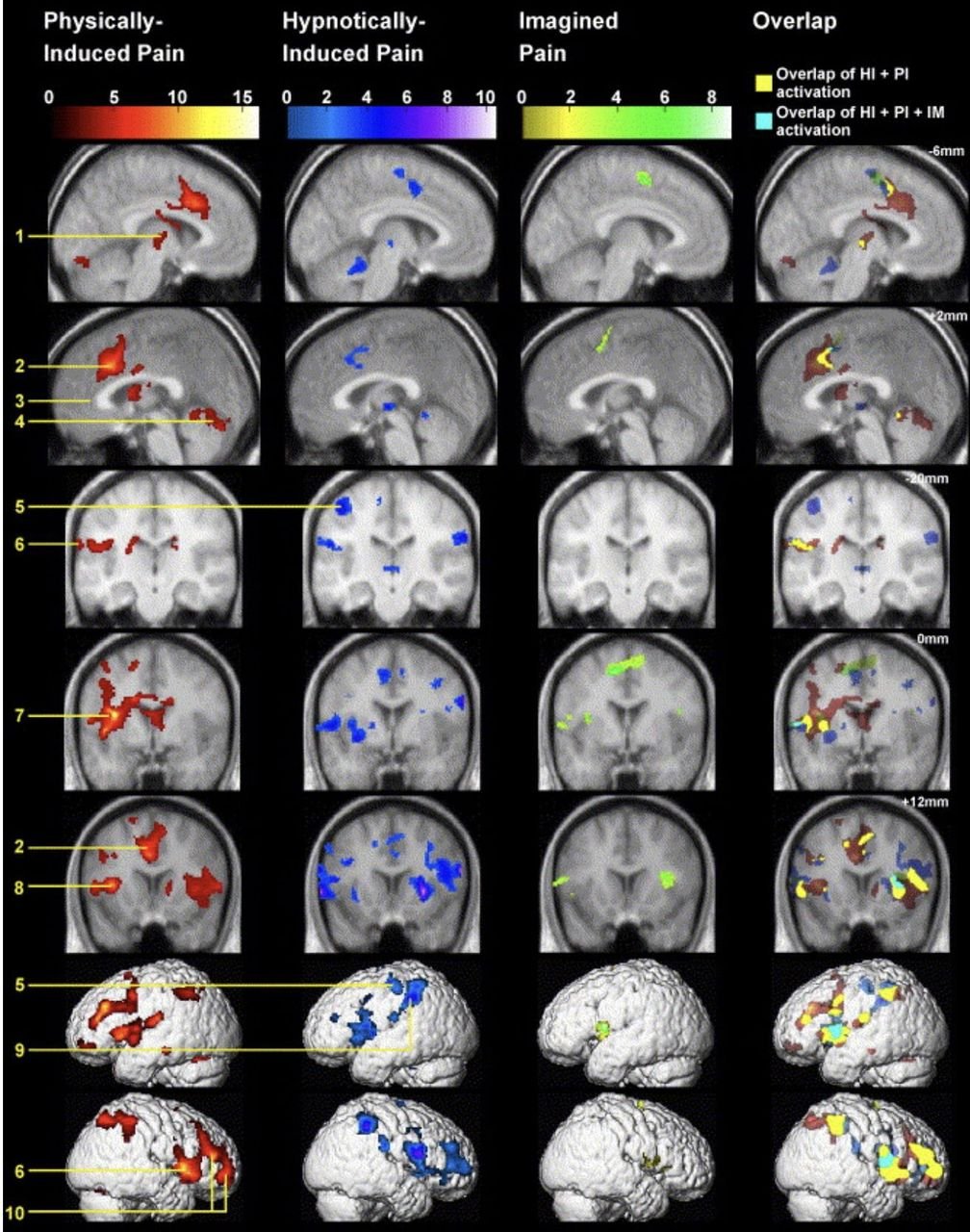
Figure.1: Pain activations reported by Derbyshire et al (2004) in response to physically-induced (red), hypnotically-induced (blue), and imagined (green) pain.
What hypnosis actually does for chronic pain:
Unlike pharmacological approaches, hypnosis carries no negative side effects. Studies have reported positive secondary benefits including improved sleep, greater sense of control, and enhanced overall wellbeing. Outcomes that matter enormously to anyone living with chronic pain day to day.
Coherent Breathing (5-5)
Best for: daily nervous system regulation, reducing baseline pain levels
This rhythm brings heart rate variability into coherence — a state associated with reduced stress hormones and lower pain sensitivity.
With regular practice, it shifts your nervous system's baseline.
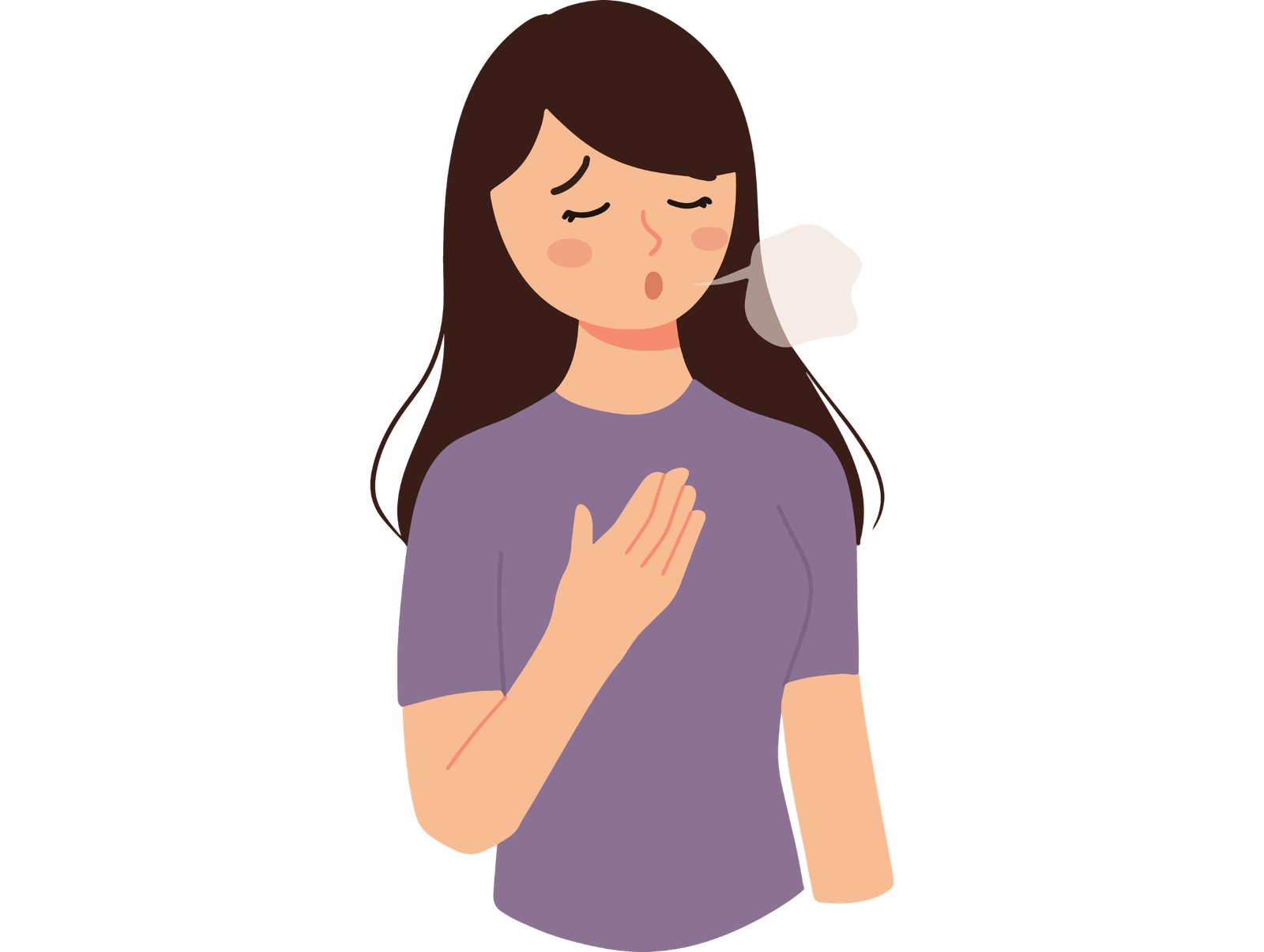
The 4-7-8 Breath
Best for: acute stress, pain spikes, moments of overwhelm
The extended exhale activates the parasympathetic nervous system — your body's built-in calm response. It effectively applies the brakes to the stress-pain amplification loop.
Box Breathing
Best for: grounding during a pain flare, regaining a sense of control
This structured rhythm interrupts the anxiety spiral. Used by pain clinics, athletes, and military personnel for rapid nervous system reset.

Creating Your Safe Space: A Visualization Technique for Pain Flares
How to Build Your Safe Space (Step-by-Step Guide)
Find a quiet moment when your pain is at a manageable level. Sit or lie comfortably. Start with a few rounds of coherent breathing.
Then, gently begin to imagine a place — real or imaginary — where you feel completely safe, calm, and at ease.
As you build this place in your mind, engage all your senses:
Spend 10–15 minutes simply being in this place. You don't need to do anything there. Just exist in it. Let your nervous system absorb the calm.
Practice this once a day for two weeks. Each visit deepens the neurological pathway. The place becomes more vivid, more immediate, more accessible under pressure.
Using Your Safe Space During a Pain Flare
At the first sign of a pain spike, before it peaks, this is your cue:
The goal is not to deny the pain. It's to give your nervous system a different signal: "I am safe. I am not in danger." Which interrupts the stress-pain amplification loop before it peaks.
Chronic pain changes your life. But it doesn't have to define it.
The tools on this page — breathwork, visualization, and hypnosis for chronic pain — are not quick fixes. They are skills. And like all skills, they grow stronger with practice. But unlike medication alone, they work with your nervous system, building new patterns from the inside out.
Many people who have spent years managing chronic pain report that understanding the 1/3 rule — and learning to address the anticipation and memory layers — is genuinely transformative. Not because the physical signal disappears overnight.
But because the suffering built around it begins, slowly, to loosen its grip.
You've already taken the first step by being here.