
If you’ve ever asked yourself “why am I stressed?”, you’re not alone — and science has a remarkably precise answer. Stress is not a random feeling. It is a finely tuned biological programme your body runs to prepare you for action. Understanding that mechanism is the first step toward breaking free from it.
What is stress?
The World Health Organization defines stress as:
What happens when a person’s resources and personal coping strategies are overwhelmed by the demands placed upon them.
In other words, why am I stressed? Because the pressure you face has outpaced your perceived capacity to deal with it.
The biological story of stress was largely written by Hans Selye, a Canadian endocrinologist of Austrian origin, who in the 20th century identified the mechanisms he first called the General Adaptation Syndrome.
He later gave it its famous name: the fight-or-flight response — the cascade of changes that occur when your body marshals every resource it has to either confront a threat or escape it.
Selye also introduced the distinction between eustress (positive, motivating stress) and distress (harmful, depleting stress).
The 3 phases of stress
Selye identified three distinct stages the body moves through when confronted with a stressor. Knowing these phases helps answer the question “why am I stressed and why won’t it go away?”.
The alarm reaction — "Fight or flee"
Immediate · Seconds to minutes
This is the body’s emergency broadcast. The moment a threat is perceived, the adrenal glands flood the bloodstream with adrenaline and cortisol. Heart rate spikes, blood pressure rises, blood glucose surges to fuel the muscles, and the senses sharpen to a state of hyper-alertness. Every system is on standby, waiting for one thing: a decisive action. Your body is not asking you “why am I stressed?” — it already knows the answer. It is asking “what are you going to do about it?”
The resistance phase — Sustained adaptation
Chronic · Days to weeks
If the stressor is not resolved — if no action is taken — the body doesn’t simply shut down. It downshifts into a slower, more sustained stress response. Stress hormones continue to circulate, but at a lower rhythm. The organism tries to return to balance while remaining on alert. If the source of stress disappears at this stage, recovery is still possible. But if inaction continues, the system is pushed toward the third and most dangerous phase.
The exhaustion phase — When the body gives out
Critical · Weeks to months
This is the phase that often explains a deeper feeling many people recognise: being stressed all the time, running on empty, and not quite feeling like yourself anymore. When the body has been on high alert for too long, its resources gradually run low. The immune system becomes less resilient, energy levels drop, and emotional balance can feel harder to maintain. Over time, this sustained state of tension may contribute to low mood, sleep difficulties, or physical fatigue. This is not a personal failing — it is simply the body’s honest signal that something needs to change.
Laborit's crucial insight: inhibition of action
Henry Laborit — Inhibition of action
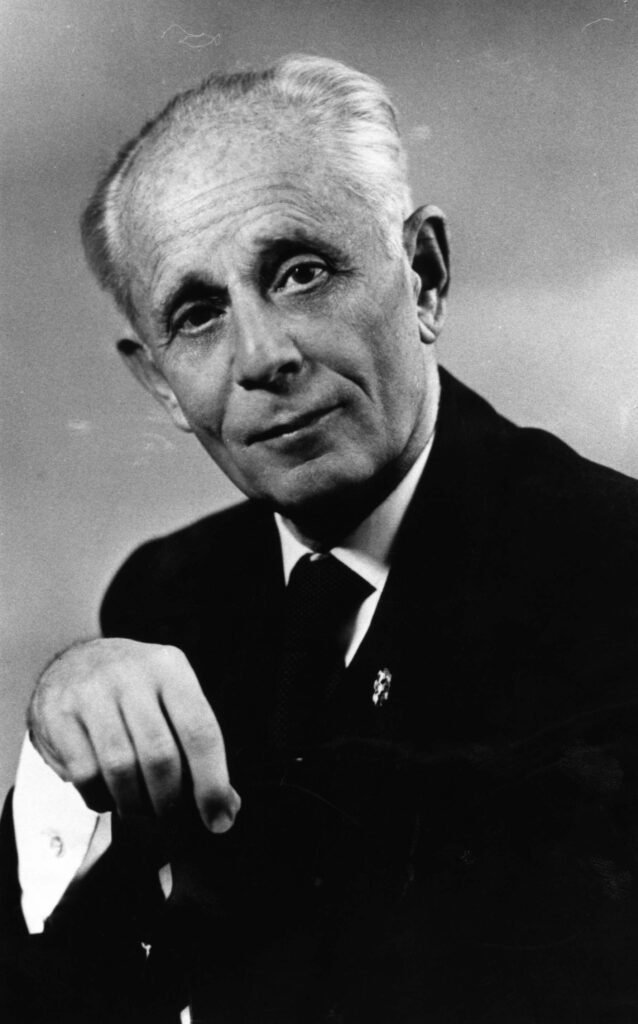
French biologist Henri Laborit asked a fascinating question: what happens to us when we feel truly stuck — when we can’t fix the situation, and we can’t walk away from it either?
He found that this state of being frozen, unable to act in any direction, is actually one of the most harmful places we can be. He called it inhibition of action, and showed that staying stuck for too long starts to affect not just our mood, but our nervous system and even our immune system.
Interestingly, Laborit believed that choosing to step back — deliberately shifting your focus and priorities to protect your own wellbeing — is far healthier than simply doing nothing while the pressure builds.
More simply put:
When you can’t fight and you can’t flee, the worst thing you can do is freeze.
Richard Lazarus — Way of thinking
Around the same time, American psychologist Richard Lazarus added another layer to this picture. He noticed that two people can face the exact same stressful situation and experience it very differently.
What makes the difference, he found, is not the situation itself but how each person thinks about it — and what they feel they can do about it. The more helpless we feel, the more intense and lasting the stress becomes. This idea can be summarized by:
Stress is not what happens to you. It is what you believe you can do about it.
The Central Insight
Stress is not the enemy — it is a preparation programme. The body activates stress to generate the energy needed for action. It is prolonged inaction that transforms a healthy alarm signal into a destructive and chronic condition.
The real answer to "why am I stressed?" — and what to do about it
Here is the single most important thing to understand: stress is your body preparing you to act. Every hormone, every physiological change in the alarm phase exists for one purpose — to move you. When action doesn’t follow, the energy stays trapped in the system, and the stress machine keeps running.
This means that the antidote to stress is not relaxation alone — it is action. Any concrete step toward resolving the source of pressure, however small, signals to the nervous system that the threat is being addressed. That signal begins to switch off the alarm.
If you regularly ask yourself “why am I stressed?” and find no answer, it is worth asking a different question: “what action am I avoiding?” The stress is almost always pointing at something that needs to be done, said, changed, or left behind.
Practical ways to convert stress into action
Name the stressor
Write down exactly what is stressing you. Vague dread becomes a solvable problem when it is made concrete.
Take one micro-step
Any movement counts. Send the email. Make the call. Start the document. Signal to your body that the situation is in motion.
Move physically
Exercise is a biological shortcut — it burns off the stress hormones that the alarm phase produced and resets your baseline.
Choose flight wisely
As Laborit argued, sometimes the most powerful action is to reframe your goals and walk away from an unwinnable situation.