
Hypnosis might not be what it seems
Most people picture a hypnotised person as somewhere between sleep and wakefulness. The mind seems quiet. The body seems still. This image feels intuitive — and it is almost entirely wrong.
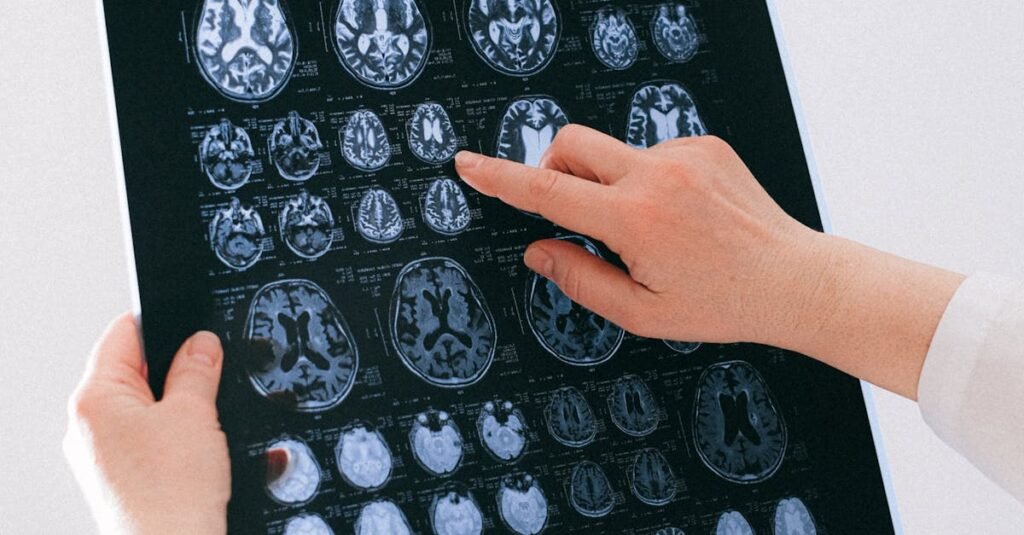
Neuroscientific research tells a very different story about what happens in the brain during hypnosis. Far from switching off, the brain enters a state of intense, focused inner activity. Understanding this changes how we think about hypnosis entirely.
The brain is not resting — it is working differently
For a long time, it was assumed that hypnotic induction produced something close to sleep. The brain scans told a different story.
When researchers compare brain activity during ordinary wakefulness with brain activity during a hypnotic state, they find that more cerebral regions are active under hypnosis than during normal consciousness. The cerebellum, the anterior cingulate cortex, and parts of the parietal lobe all show increased activation. Rather than a state of rest, hypnosis produces what neuroscientists now describe as a state of inner hypervigilance.
This translates into a reduced activity in the brain’s self-referential networks, and significantly increased activity in the attentional and executive systems.
In other words, hypnosis does not quiet the brain. It redirects it. 

The three networks that matter
To understand what happens neurologically, three key brain networks matter. Hypnosis changes the balance between all three.
The Default Mode Network (DMN) is active when we are not focused on a task: when we daydream, ruminate, replay memories, or anticipate the future. It is the network of the wandering mind — and of self-criticism, overthinking, and the inner voice that questions everything. During hypnosis, activity in the frontal parts of this network decreases significantly. This is why people in trance often describe a sense of relief from mental chatter: the analytical, self-monitoring part of the mind steps back.
The Central Executive Network (CEN) is responsible for working memory, focused attention, and cognitive control. Rather than decreasing under hypnosis, this network becomes more active — maintaining focus, implementing mental strategies, and preparing responses to suggestions. It is the part of the brain that makes engagement with hypnotic suggestions possible.
The Salience Network acts as a switch between the two, detecting which stimuli — internal or external — are most relevant and directing attention accordingly. During hypnosis, this network plays a key coordinating role, facilitating the shift away from external distractions and toward inner experience.
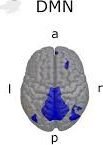
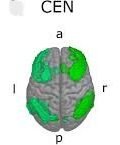
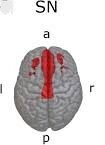
The result of this three-way rebalancing is something quite specific: a quieter inner critic, a more receptive and focused mind, and a brain that is primed to work with — rather than against — the suggestions offered in session.
The role of the anterior cingulate cortex
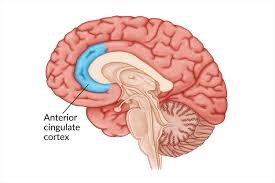
One structure deserves particular attention: the anterior cingulate cortex (ACC). Research consistently shows that it is strongly activated during hypnotic induction, and its activation appears to facilitate the neuroplasticity that makes hypnosis therapeutically effective.
The ACC is considered the brain’s centre of desire and the will to act. It is also central to the experience of pain and emotion. Under hypnosis, its activation contributes to a heightened sense of depth, better emotional regulation, and increased suggestibility — the brain’s willingness to respond to therapeutic suggestions.
Notably, the ACC is the region that stops functioning in cases of akinetic mutism or catatonia. Its role in hypnosis helps explain why the hypnotic state can access and influence experiences — including pain, automatic responses, and emotional memory — that are difficult to reach through conscious effort alone.
What this means for absorption and dissociation
Two of the defining features of the hypnotic experience — absorption and dissociation — can now be understood in neurological terms.
Absorption, the capacity to become fully immersed in an inner experience while external perceptions fade into the background, is associated with increased activity in the executive control network and with the hyperfocused attention of the anterior cingulate cortex and fronto-parietal networks. It is not a passive state. It requires active neural engagement.
Dissociation — that sense of being simultaneously actor and observer, of actions feeling somehow automatic — reflects a disconnection between the executive control and salience networks. During trance, this disconnection allows a person to engage fully with the actions suggested by the therapist without having to consciously monitor the fact that they are doing so. It is this quality that makes hypnosis so effective for working with habitual patterns, phobias, or automatic emotional responses: the usual circuit of conscious resistance is, temporarily, bypassed.
A predictive brain, open to new possibilities
There is one more piece of the puzzle worth understanding. The brain is fundamentally a predictive machine — constantly comparing what it expects to perceive with what it actually perceives, and constructing experience accordingly. Our perceptions, emotions, and behaviours are shaped not only by incoming sensory information, but by deep patterns of expectation built up over a lifetime.
Hypnosis works, in part, by creating the conditions in which those predictions can be updated. With the default mode network quietened, the critical faculty suspended, and the executive network engaged, the brain becomes genuinely open to processing experience differently. Suggestions offered in this state are not just heard — they interact with the brain’s predictive architecture in a way that can begin to shift long-standing patterns.
This is why hypnotherapy can be effective for issues as varied as chronic pain, anxiety, unwanted habits, and emotional responses. Issues that might feel impossible to change through willpower alone.

So what does this mean for you?
When you come to a hypnotherapy session, you are not handing your brain over to someone else. You remain conscious, aware, and capable of remembering the experience. What changes is the direction of your attention and the way your brain relates to its own patterns.
The hypnotic state creates a window — one in which the noise of habitual thinking softens, the mind’s natural flexibility comes to the fore, and the possibility of genuine, lasting change becomes real.
If you are curious about what hypnotherapy could offer you, I would be glad to talk it through.
 I offer Ericksonian hypnotherapy sessions in Bristol, in English and French. 👇